
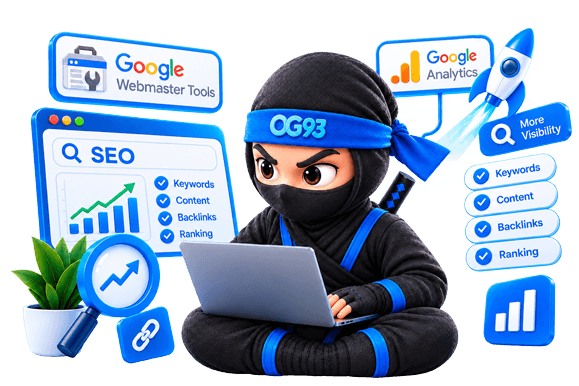
1. Crawl: the explorers visit
Google's robots (called crawlers) travel from link to link and read pages. If they cannot reach or understand a page, it stays invisible.

SEO helps the right people find your website on Google. I make your site clear to search engines and useful to visitors, and I explain every step in plain language.
Short answer: SEO stands for Search Engine Optimization. It is everything that helps your website show up on Google when someone searches for what you offer. Better SEO means more of the right people finding you, without paying for every click.
Longer answer: imagine Google as a huge librarian. Millions of people ask it questions every second, and it recommends the pages it believes will help most. SEO is the art of making your page easy for the librarian to find, read and trust, and genuinely useful for the person asking. It is not about tricking Google: it is about being the best answer.
No black magic and no secret formula. Just clear structure, fast pages, useful content and a bit of patience. (I will translate every technical word along the way, promise.)
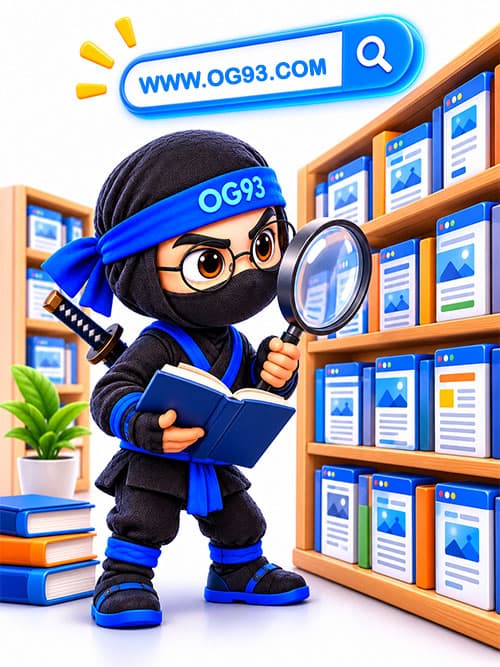
Here is what happens behind the scenes before a page appears in the results:
Google's robots (called crawlers) travel from link to link and read pages. If they cannot reach or understand a page, it stays invisible.
Google stores the pages it understood in a giant library called the index. A page that is not indexed cannot appear in the results.
When someone searches, Google picks the most relevant, helpful and trustworthy pages from its index and sorts them. That order is the ranking.
SEO is not one trick, it is a team of four players. A good strategy uses all of them:
The foundations: fast loading, mobile friendly, secure (HTTPS), clean structure and pages that Google can easily crawl and index.
Useful pages that answer what people really ask, with clear titles, descriptions and headings that match their search intent.
Other trustworthy websites mentioning and linking to you. They work like recommendations: quality counts far more than quantity.
Being found in your city or country, and in the right language. Useful for local businesses and for sites in several languages.
A website nobody finds is like a shop in a dead-end street. Here is what good SEO changes:
You attract people who are already searching for what you offer, so they are far more likely to contact you or buy.
SEO takes time, but good pages keep bringing visitors month after month, without paying for every click.
Appearing high in search results, with a clear and professional site, makes people trust you faster.
As your organic visitors grow, you rely less on paid advertising to get attention.
You can see what works with free tools like Google Search Console and analytics, and adjust with facts instead of guesses.
Many SEO improvements (speed, clarity, mobile layout, accessibility) make the site nicer to use for every visitor, not just for Google.
No secret formula. This is the path we follow, with plain-language explanations at every stage:
I check the health of your website: technical issues, speed, structure, content and what Google can and cannot see. It is like a check-up before the treatment.
I find the words and questions your future customers really type, and what they hope to find. This is called search intent, and it guides everything else.
You get a clear, prioritized list: quick wins first, bigger projects next. No 50-page report that nobody reads.
I fix technical problems, improve titles, descriptions and page structure, add structured data, and improve or create content that answers real questions.
I help your site earn quality links and mentions the honest way. No shady shortcuts that can get you penalized.
I track the results with Google Search Console and analytics, explain them in plain language and refine the plan. SEO is a marathon, not a sprint.
SEO loves jargon. Here is the decoder:
An SEO specialist makes a website easier for search engines to find, understand and trust, and more useful for visitors. In practice that means technical fixes, keyword research, better titles and content, links from other sites and regular tracking of the results.
SEO is a long game. Small technical fixes can show effects within weeks, but building visibility usually takes a few months, and competitive topics take longer. The good news is that results tend to last.
It depends on the size of your site, how competitive your field is and whether you need a one-off audit and fixes or ongoing work. Tell me about your website and your goals and I will give you a clear, honest proposal.
No, and be careful with anyone who does. Nobody controls Google's results, and rankings depend on competition, content quality and time. What I can promise is honest work on everything that is in my hands, and clear reporting on the results.
Yes. Google itself says that SEO best practices still apply to its AI features, such as AI Overviews and AI Mode, which are built on its core search systems. Clear, helpful, well-structured content that search engines can crawl is what gets used. Other AI assistants work differently, but the same foundations (useful content, clear structure, trust) help there too.
They do different jobs. Ads bring visitors quickly but stop when you stop paying. SEO is slower to build but keeps working. Many businesses use ads to get started and SEO to build lasting visibility.
Often your current site can be improved. I start with an audit to find out what holds it back. If the foundations are too weak (for example a very slow or badly structured site), I will tell you honestly, and I can rebuild it with SEO in mind.
We track clear indicators: how many people see your site on Google, how many click, which searches bring them and how many contact you or buy. I explain the numbers in plain language, so you always know where you stand.
I do not just say I know SEO: my training is backed by an official digital badge issued through Credly. Click it to check it yourself on the issuer's platform.
Real reviews from people I have worked with.
Wir als Online Marketing Agentur können OG93 als Freelancer und Partner sehr empfehlen. Kompetente Beratung, fachliches Know-How und kreative Prozesse sprechen für Oucema!
Online Marketing Agentur
Marketing agency
Professionnel, je recommande ce Web désigner pour la réalisation de vos sites et vos projets, Encore merci 👌👍👍👍
Meilleur Diag
Real estate diagnostics company
Travailler avec "Oucema Galaî" a été une expérience exceptionnelle du début à la fin. Son expertise en développement frontend et UX/UI Design est véritablement remarquable. Grâce à son talent et son dévouement, nous avons pu créer une application mobile à la fois performant et esthétiquement plaisant. Son sens aigu du design et son attention aux détails ont vraiment fait la différence. Je recommande vivement Oucema à quiconque recherche un travail de qualité supérieure. 5 étoiles bien méritées !
Nadim Gouia
Software Engineer
Tell me about your website and your business: what you offer, who you want to reach and where you are today. I will tell you honestly what is worth fixing first. No jargon, no pressure.
Let's talk SEO